

Real Estate11 July 2024
2024 Real Estate Trends: Essential Insights for Buyers and Sellers
Understand the market forces reshaping Nigerian real estate in 2024 — from pricing trends to buyer behaviour shifts.
Read more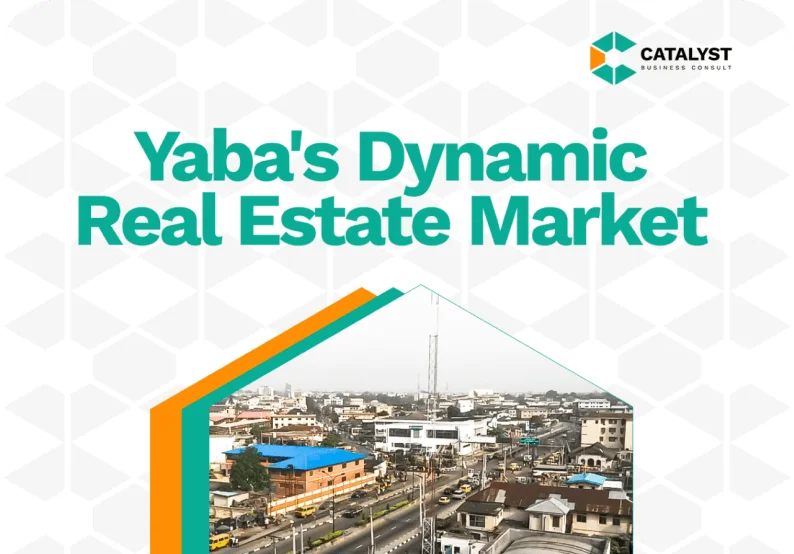
Every decade in Lagos, a handful of neighbourhoods quietly transform from overlooked backwaters into premium investment addresses and the investors who saw the signal early built generational wealth from the shift. Lekki Phase 1 was once considered remote; today it is among the most expensive residential addresses in West Africa. The same story played out in Victoria Island, Ikoyi, and Ikeja GRA. The question for 2025 is not whether history will repeat it always does in Lagos but rather which corridors are at the inflection point right now.
Identifying an emerging neighbourhood before the market fully prices in its potential requires reading a set of convergent signals simultaneously. No single indicator is sufficient — it is the combination and timing that creates the investment thesis. The most reliable early signal is a major infrastructure announcement or commitment: a new road expressway, a rail line, a port, or a government-backed free trade zone. Such announcements reduce friction for residents and businesses, pulling population and capital toward the area. Critically, the biggest gains are made between announcement and completion — once infrastructure is operational, prices have often already adjusted.
The second signal is developer activity. When credible real estate developers begin quietly acquiring land in a corridor, it is a reliable indication that their research suggests near-term appreciation. Land banking by institutional players — construction companies, real estate funds, HNI syndicates — typically precedes public price movement by 18 to 36 months. Rental yield data tells a complementary story: rising yields in a corridor indicate genuine organic demand outpacing housing supply, independent of speculative price inflation. Population inflow data — school enrolment figures, utility connection rates, motor traffic counts — round out the picture.
Proximity to established zones is the final ingredient. Lagos has shown repeatedly that appreciation migrates outward from premium islands and established zones in concentric rings. Areas within 15–30 km of existing high-value nodes benefit first from the overflow of demand that priced-out buyers and renters generate. Understanding where Lagos is growing — and how fast — is the lens through which each of the five corridors below should be assessed.
1. Ibeju-Lekki is the single most data-backed emerging corridor in Nigeria right now. The co-location of three landmark projects — the Dangote Petroleum Refinery and Petrochemical Complex (the largest single-train refinery in the world), the Lekki Free Trade Zone, and the Lekki Deep-Sea Port — has transformed what was agricultural land into one of the most strategically significant industrial and residential corridors on the continent. Land prices have already appreciated dramatically, yet analysts project a further 58% upside over the next three years as construction workers, logistics staff, and service-sector employees demand residential supply that has not yet been built. Current entry prices range from ₦12–28 million per plot depending on proximity to the industrial zones, with the most accessible land sitting further inland but still within the infrastructure catchment area.
2. Epe sits approximately 60 km from Victoria Island but has quietly recorded some of the fastest percentage appreciation outside the Lagos Island axis over the past five years. The combination of its Lekki-Epe Expressway connectivity, planned eco-tourism infrastructure, and growing domestic tourism interest driven by its waterfront and forested terrain positions it as a dual-play investment: short-term rental income from weekend visitors and long-term capital appreciation as urban sprawl extends eastward. Land entry prices of ₦8–18 million per plot represent some of the best value relative to medium-term appreciation potential currently available in Lagos State.
3. Sangotedo / Ajah Extension represents the natural overflow from Lekki Phase 1 — the residential beneficiary of affordability pressure pushing buyers and renters eastward along the Lekki-Epe corridor. Mid-market developers have been acquiring and developing land aggressively since 2022, bringing estate-format residential products targeting the upwardly mobile Lagos professional. Two-bedroom apartments in completed estates currently trade at ₦35–55 million, with rentals generating yields of 7–10% — among the best liquid residential yields in Lagos. Infrastructure completion along the corridor, including improved drainage and road access, is accelerating demand from buyers who previously hesitated.
Based on infrastructure timelines, developer activity, and demand inflow data
4. Agbado / Ifako is Lagos's most interesting industrial-residential crossover play. Straddling the Lagos-Ogun boundary, the area benefits from its proximity to the Lagos-Ibadan Expressway, a planned Lagos State Government light rail station, and the expansion of industrial estates that are drawing manufacturers and logistics operators outward from the congested mainland. This dual industrial and residential demand profile supports land prices even in downturns — making it a resilient, lower-volatility holding. With entry points at just ₦4–9 million per plot, it offers the lowest barrier to entry of any corridor on this list, and projected 3-year appreciation of 37% makes the risk-adjusted case compelling for investors who can tolerate a 5–7 year horizon.
5. Magodo Phase 2 occupies a different position in this list — not a greenfield emerging corridor, but an established area showing a second wave of appreciation. The Phase 2 extension of one of Lagos's most trusted residential addresses is attracting buyers priced out of Magodo Phase 1 and Ikeja GRA, bringing fresh demand into a well-served, gated-estate environment. Three-bedroom detached and semi-detached homes trade between ₦180–280 million — a price point that reflects genuine scarcity of quality residential product in a security-conscious, infrastructure-equipped neighbourhood. The premium here is not speculative; it is backed by defensible lifestyle amenities and proven community management.
"The best time to invest in an emerging neighbourhood is before everyone else knows it's emerging. Data reveals what eyes cannot yet see."
Understanding which neighbourhoods are emerging is only half of the investment equation — the other half is knowing how to enter, structure, and hold a position effectively. A phased entry strategy — acquiring in stages as infrastructure milestones are hit rather than committing the full capital upfront — reduces timing risk and improves average entry price. Rather than waiting for full appreciation to crystallise before generating returns, investors should prioritise rental yield as the bridge income while holding for capital gain. A corridor that delivers 8–10% annual rental yield while also appreciating 15–20% per year generates a blended return that outperforms almost any other asset class available to Nigerian investors.
Emerging neighbourhood investment carries risks that professional guidance materially reduces. Title documentation — ensuring a property has a Certificate of Occupancy, Governor's Consent, or valid deed of assignment — is the single most important due diligence step and also the one most often skipped in informal transactions. CBC Africa's real estate team conducts comprehensive due diligence on properties across all five corridors highlighted above, helping investors verify titles, assess fair market value, negotiate purchase terms, and structure exit timelines. Whether you are investing ₦5 million in a plot at Agbado or ₦200 million in a Magodo Phase 2 residence, having a knowledgeable partner who tracks these corridors full-time is the clearest edge an investor can carry into the Lagos property market.
CBC Africa's real estate team tracks emerging corridors across Lagos — helping investors get in before the market fully prices in the opportunity.
Continue Reading
Understand the market forces reshaping Nigerian real estate in 2024 — from pricing trends to buyer behaviour shifts.
Read more
Yaba is fast becoming one of Lagos's most exciting real estate corridors, blending tech-hub energy with residential investment upside.
Read more
What separates successful real estate investors from the rest — mindset, methodology, and the habits that compound over time.
Read more